


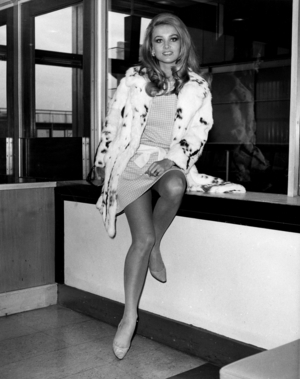
Florence Fossorier was a French fashion model best known for her presence in the 1970s Paris fashion scene, a time when individuality and freedom defined the essence of beauty. Captured in vintage archives and fashion photography, Florence became a quiet icon of the decade’s fearless, chic energy.
In one widely circulated photograph from the early 1970s, Florence was seen wearing her own clothes—a stylish mix of hot pants and knee-high boots. This look perfectly embodied the decade’s transition from formal elegance to effortless street glamour. She was not merely posing in designer wear; she was expressing authentic French femininity that was confident, natural, and independent.
Though Florence Fossorier’s modeling career remains lightly documented, her name continues to surface in vintage image archives, fashion galleries, and genealogy records. She represents that rare category of models who shaped style by living it—without the noise of celebrity, yet leaving a timeless visual impression.
| Fact | Details |
|---|---|
| Name | Florence Caroline Marie Eliane Fossorier (variant: Florence Anne Laure Fossorier) |
| Profession | French fashion model, active during the 1970s |
| Famous For | Vintage Paris photos featuring her own fashion styling |
| Known Appearance | Hot pants and knee-high boots, symbolizing Parisian youth culture |
| Era of Prominence | Early to mid-1970s |
Florence’s subtle influence reflects a shift in the modeling world—from the elite haute couture standards to more personal, realistic portrayals of beauty. She was part of a generation that blurred the line between model and muse, representing the new Parisian woman: stylish yet approachable, modern yet rooted in classic elegance.
Paris Fashion in the 1970s
The 1970s in Paris was an era of vibrant rebellion and self-expression. The strict fashion codes of the 1950s and 60s began to fade, replaced by a creative freedom that allowed both designers and models to explore identity through clothes. Paris, the heart of haute couture, opened its arms to a new sense of casual glamour—and models like Florence Fossorier perfectly embodied that shift.
The decade celebrated the idea that style could come from within. Women began wearing hot pants, suede skirts, oversized hats, and tall boots not to follow rules but to tell stories about who they were. Florence, often seen wearing her own outfits in photographs, reflected this change naturally. She wasn’t just wearing a trend—she was a symbol of the liberated French woman who loved color, confidence, and creativity.
Florence’s Signature Look
Florence Fossorier’s most famous image shows her in shorts and knee-high boots, a look that defined the daring side of Parisian fashion. It wasn’t only about showing skin—it was about celebrating independence and movement. The outfit represented women stepping out of traditional molds, claiming the streets of Paris as their runway.
Her style often mixed feminine softness with bold energy. Think of textured fabrics, playful patterns, and relaxed confidence. She wasn’t bound by luxury brands—her charm came from the authenticity of wearing clothes she loved. This personal touch made her stand out, turning a simple outfit into a timeless piece of art.
| Element | Meaning in 1970s Paris Fashion |
|---|---|
| Hot Pants | Symbol of youth and freedom |
| Knee-high Boots | Power and confidence |
| Personal Styling | A statement of individuality |
| Natural Hair & Makeup | A move toward authenticity |
Florence’s look continues to inspire today’s fashion world. Many designers revisit that 70s Paris style—clean lines, playful sensuality, and self-made chic—because it feels timeless. Her influence is quiet but real, living on in the effortless fashion spirit that defines modern French style.
Her Legacy and Cultural Impact
Although Florence Fossorier didn’t become a household name like Brigitte Bardot or Jane Birkin, her image lives on through vintage archives, fashion blogs, and collectors’ prints. She represents the women who shaped fashion from the ground up—those who didn’t chase fame but inspired it.
Florence’s simple elegance tells us something important about beauty: it doesn’t need to be loud to last. Her approach—being herself, wearing what she loved, and expressing her time—has become a foundation for modern minimalist fashion. She paved the way for authenticity to matter more than labels.
Today, as people rediscover old photographs and 1970s trends resurface, Florence’s name quietly returns in fashion circles. She reminds us that style is eternal when it comes from the soul, not just the wardrobe.
FAQs
1. Who was Florence Fossorier?
Florence Fossorier was a French model active during the 1970s in Paris. She became known for her vintage photographs showing her wearing her own stylish outfits.
2. What was she famous for?
She gained attention for her confident street-style looks—especially a photo showing her in hot pants and boots, symbolizing 70s Parisian fashion freedom.
3. Did she design her own clothes?
Sources suggest she wore and possibly designed her outfits. Her photos often describe her as “wearing her own clothes,” showing her creative flair.
4. Is Florence Fossorier still active today?
There is little modern information about her, implying she stepped away from modeling and public life after her fashion era ended.
5. Why is she important in fashion history?
Because she represents real, everyday elegance—the kind that comes from personality, not fame. Her natural Parisian charm defined the 70s spirit of self-expression.
Read more : Pierre Aubry de Gouges: The Forgotten Son of a Revolutionary Woman