


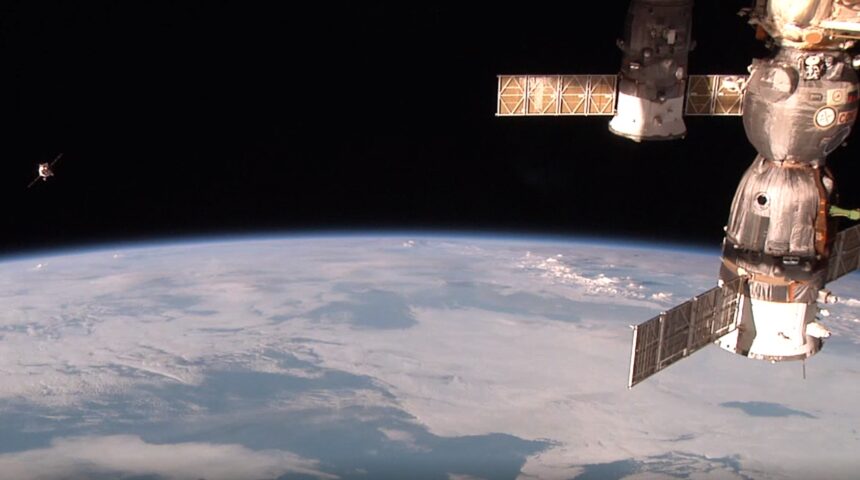
The ISS Live Feed is a continuous real-time video broadcast from the International Space Station (ISS) — a large spacecraft that circles Earth about every 90 minutes. Through this feed, you can watch stunning views of our planet as seen by astronauts and cameras floating in space.
Table of Contents
It’s more than just a video stream; it’s a window to our world from orbit. Viewers often describe it as calming and even spiritual — seeing clouds drift, lightning flash across continents, and the thin blue atmosphere protecting Earth. This unique live view helps us appreciate how small and connected we all are on our shared planet.
NASA created the feed to make space exploration more accessible. The goal was to inspire people, especially young students, by giving them the chance to see Earth exactly as astronauts do.
| Feature | Details |
|---|---|
| Orbit Speed | ~28,000 km/h (17,500 mph) |
| Orbit Altitude | ~400 km (250 miles) above Earth |
| Orbit Time | 90 minutes per rotation around Earth |
| Main Source | NASA’s ISS HD Earth Viewing Experiment |
| Stream Type | Live video (external + internal cameras) |
How the ISS Live Feed Works
The ISS live stream uses high-definition cameras installed on the station’s exterior modules. These cameras are pointed toward Earth to capture continuous footage of the planet’s surface. They are connected through NASA’s Tracking and Data Relay Satellite System (TDRSS), which sends signals back to Earth in real time.
When the ISS passes over regions covered by relay satellites, the video appears smooth and clear. However, when it moves out of satellite range, viewers might see a blue or black screen — that’s when the signal is temporarily lost. It’s completely normal and happens several times a day.
The feed switches between different camera views, such as forward-facing, downward, or side angles. Occasionally, it also shows inside the ISS, where astronauts conduct experiments or float around during daily activities.
Challenges and Signal Gaps
Even though the ISS live feed is one of the most fascinating video streams online, it faces a few challenges.
The signal transmission must pass through several satellites before reaching ground stations on Earth. When there’s interference or the ISS moves behind Earth, the feed cuts off temporarily.
Another challenge is camera durability. The external cameras face extreme temperatures — from −250°F (−157°C) in shadow to 250°F (121°C) in sunlight. NASA engineers regularly upgrade these systems to handle such harsh environments and keep the live stream reliable.
3. Where & How to Watch the ISS Live Feed
Official Sources for the Live Stream
The easiest way to watch the ISS Live Feed is through NASA’s official website or NASA TV YouTube channel. These platforms broadcast 24/7 live views from the ISS, alternating between Earth-view and in-station footage.
You can also access the feed on the European Space Agency (ESA) website, or through apps like ISS Live Now, available on Android and iOS. These apps combine the live stream with an ISS tracker, letting you see where the station is flying over at any given moment.
Other reliable options include:
- YouTube (NASA ISS HD Earth Viewing Experiment)
- UStream or Twitch space channels
- Sen 4K Earth Live Feed, which streams ultra-high-resolution video
Tips for the Best Viewing Experience
- Try watching when the ISS is over daylight areas for the clearest views.
- Pair the live feed with an ISS tracker app to know the station’s location.
- Use a stable internet connection — high-quality video requires strong bandwidth.
- Keep the stream open during sunrise or sunset over Earth; these moments are breathtaking.
| Question | Explanation |
|---|---|
| Why is the screen black? | The ISS is passing over the dark side of Earth or out of range. |
| Is there sound? | Sometimes you hear space-to-ground communication, not always. |
| Why does the view change? | Cameras switch automatically to show different perspectives. |
| Can I see astronauts? | Occasionally, when internal cameras are active. |
5 Most Asked FAQs
1. Why does the ISS live feed sometimes stop or turn blue?
When the ISS moves out of satellite range or is on Earth’s night side, the connection drops. It’s not an error — just a temporary signal loss.
2. Can I talk to astronauts through the live feed?
No, but NASA hosts live Q&A events occasionally where you can submit questions online.
3. Can I see my country in the ISS live stream?
Yes, if the ISS is passing above your region during daylight, you might see it. Use an ISS tracker to find out when it’s visible.
4. Is the ISS live feed truly live or delayed?
It’s almost real-time, with just a few seconds of delay due to data transmission through satellites.
5. Can I record or use ISS live footage?
Yes, most footage is public domain under NASA’s usage policy, but crediting NASA is recommended.
5. Science, Education & Outreach Benefits
Inspiring the World Through Space
The ISS live feed isn’t just entertainment — it’s an educational treasure. Teachers use it in classrooms to show geography lessons, weather systems, or discussions about climate change. Students love seeing real-time storms or auroras from space, which makes learning exciting and memorable.
It’s also a reminder of how fragile and beautiful our planet is. Watching the live feed often makes people feel more connected to Earth and more aware of environmental issues like pollution and deforestation.
Supporting Research & Awareness
Scientists use ISS camera data to study cloud formations, lightning, and atmospheric changes. Environmental researchers analyze these visuals to track storms, monitor wildfires, and observe large-scale natural events.
NASA’s feed has also supported studies on human psychology, showing how seeing Earth from space — often called the “Overview Effect” — can deeply change people’s perspective about humanity’s unity and responsibility.
6. Future of ISS Live Feeds & Innovations
Next-Generation Space Cameras
As technology improves, future ISS live streams will feature even sharper images, faster connections, and multiple viewing angles. NASA is developing 4K and 8K camera systems that can stream more stable and colorful images. Some private companies, like Sen, already offer ultra-high-definition 24/7 Earth views.
Soon, viewers may experience space through virtual reality (VR) — letting people “float” alongside astronauts while looking down on Earth.
The Road Ahead for Space Broadcasting
When the ISS eventually retires, new space stations — including private ones — will likely continue live broadcasting. These next-generation outposts could include interactive feeds, multiple camera angles, and even audience-controlled views.
As communication technology evolves, the dream of continuous live coverage of space will become even more immersive and accessible for everyone.
7. How You Can Use the ISS Live Feed
Creative and Educational Uses
There are countless ways to enjoy the ISS live stream. Teachers can use it in classrooms, content creators can display it during events, and nature lovers can play it on screens as a calming backdrop. Some people even project it on walls during meditation or yoga sessions for a relaxing atmosphere.
Sharing the Beauty of Earth
You can also embed or share the ISS live feed on social media or websites. NASA encourages sharing — as long as it’s for educational or non-commercial purposes. Seeing Earth’s beauty from space brings people together and sparks curiosity about the universe we live in.
Conclusion
The ISS Live Feed is one of humanity’s most beautiful achievements — a real-time view of our world from space. It’s a reminder that despite all differences, we share one home. From breathtaking sunrises to glowing city lights, every second of this feed tells a story of unity, science, and wonder.
So, next time you have a quiet evening, open the ISS live stream and look down at our planet. You might just see your own country — or fall in love with Earth all over again.
Read more : Candice Bergen Health: A Complete Look at Her Life and Wellness Journey